
Fire detection
Protecting lives and preserving buildings
A fire can start in just a few seconds and spread within minutes.
Fire detection is the first link in the safety chain: it enables immediate identification of a fire outbreak and triggers alert and protection measures.
The objective is clear:
- Raise the alarm as early as possible
- Gain time to evacuate
- Enable a rapid response
- Limit material and human damage
How it works
Fire detection systems rely on a range of sensors and devices:
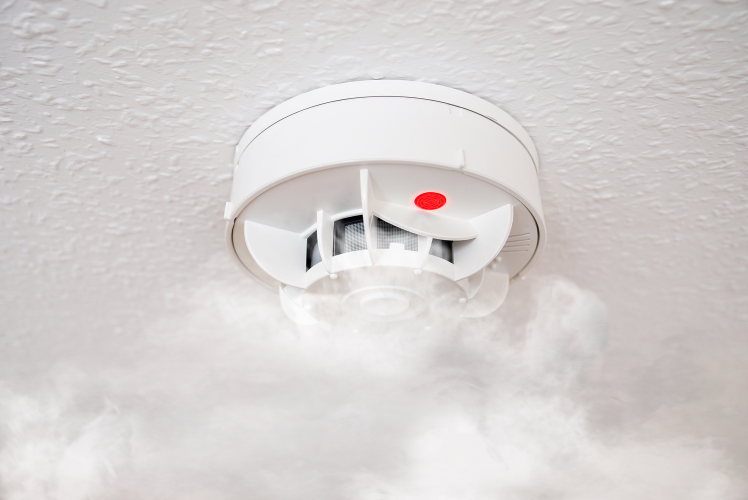
- Smoke detectors (optical or ionization): detect airborne particles.
- Heat detectors: trigger an alarm when a temperature threshold is exceeded.
- Flame detectors: identify the radiation emitted by flames.
- Multi-sensor detectors: combine several technologies (smoke, heat, CO, etc.).
- Manual call points (MCP / DM): allow anyone who detects a fire to raise the alarm.
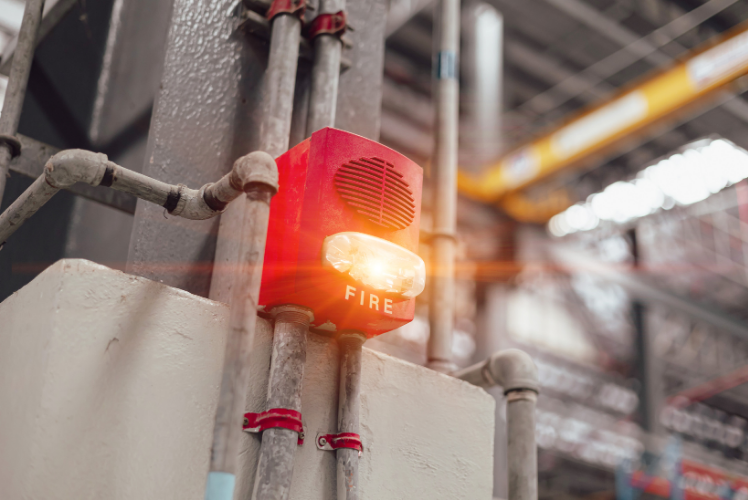
These devices are integrated into a Fire Safety System (FSS / SSI), which consists of:
- The Fire Detection System (FDS / SDI)
- The Fire Safety Management System (FSMS / SMSI) (smoke extraction, compartmentation, automatic extinguishing, etc.)
- The Fire Safety Control Panel (FSCP / CMSI), the true “brain” of the system.
A strict regulatory framework
In France, fire detection is governed by specific laws and standards:
- In residential buildings: since March 8, 2015, every home must be equipped with at least one stand-alone smoke alarm (DAAF) compliant with NF EN 14604 (Morange Law).
- In public-access buildings (ERP), high-rise buildings (IGH), businesses, etc.: fire detection is mandatory depending on the type and category of the building, with defined technical requirements (NF S 61-970 to S 61-972 for Fire Detection Systems (FDS / SDI)).

Maintenance
A fire detection system must remain fully operational 24/7.
This requires:
- Regular inspections (every 6 to 12 months)
- An up-to-date safety logbook
- Maintenance carried out by a qualified professional