
Smoke extraction
Controlling smoke to save lives and protect buildings
In case of fire, smoke is often more dangerous than flames: it reduces visibility, causes asphyxiation and poisoning, and accelerates the spread of fire.
Smoke extraction and compartmentalisation are two essential measures for limiting these effects and ensuring optimal evacuation and intervention conditions.
Why is this crucial?
An effective smoke extraction system makes it possible to:
- Maintain a layer of breathable air so that people can be evacuated safely.
- Provide emergency services with sufficient visibility to respond quickly.
- Limit the spread of fire and reduce material damage.
- Protect structures by delaying the rise in temperature.
Regulatory framework in France
Smoke extraction systems are mandatory in many types of buildings, including:
- ERP (Établissements Recevant du Public / Public-access buildings)
- IGH (Immeubles de Grande Hauteur / High-rise buildings)
- Sleeping areas (hotels, hospitals, residences, etc.)
- Certain industrial facilities
- Covered car parks
The requirements are defined by:
- The French Fire Safety Regulations for Public-access Buildings (Decree of June 25, 1980, as amended)
- The French Labour Code (articles R. 4216-13 to R. 4216-16)
- French standards: NF S 61-932, NF EN 12101, etc.
Les types de désenfumage
Natural smoke extraction
This system uses the natural convection of hot smoke to evacuate it through:
- Smoke vents
- Roof or façade openings
- Motorized windows or shutters
Advantages: low installation cost, simple operation.
Limitations: depends on weather conditions (wind, temperature).
Mechanical smoke extraction
This system uses exhaust fans to draw out smoke and release it outside.
It is suitable for enclosed spaces such as:
- Car parks
- Basements
- Large industrial facilities
Advantages: effective even without favorable natural conditions.
Limitations: requires a secure power supply.
Components of a smoke extraction system
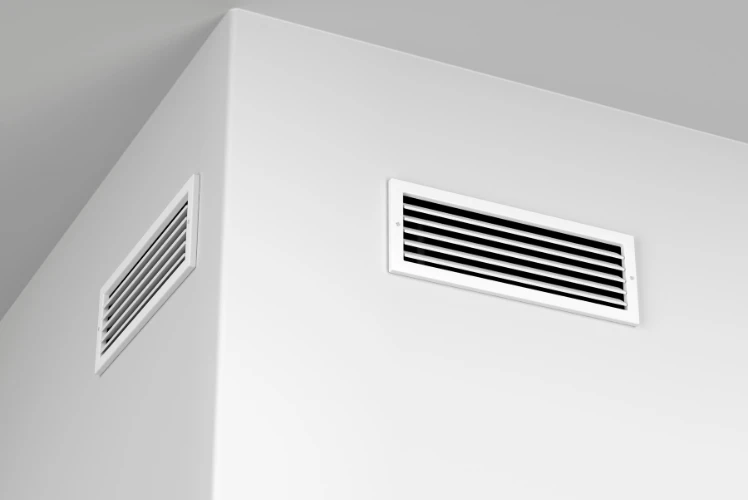
- Smoke vents or dampers : allow hot smoke to escape outside
- Smoke extraction ducts : guide smoke safely out of the building
- Fans (mechanical systems) : extract smoke when natural airflow isn’t enough
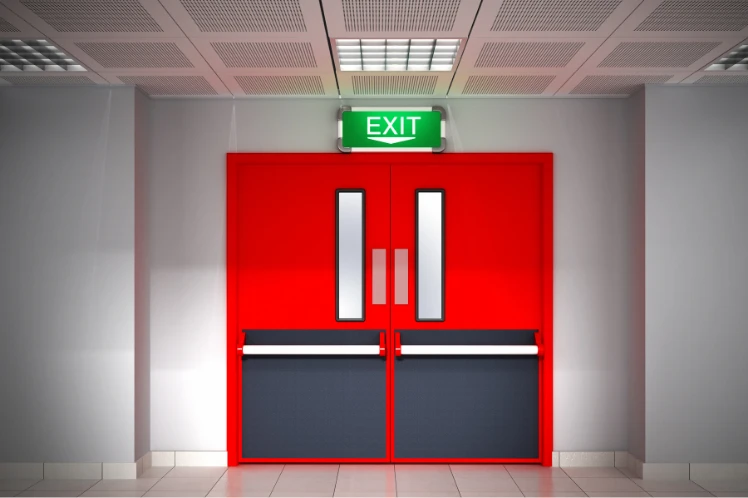
- Fire-resistant walls and doors : help contain fire and smoke in one area
- Manual or automatic controls : activate the system when needed
- Fire Safety Control Panel (FSCP) : the central unit that manages safety functions
Our Expertise
At ESTYA, we design, install, and maintain smoke control and compartmentation systems that meet the highest standards.
Our goal: to ensure occupant safety, minimize damage, and guarantee your buildings’ full regulatory compliance.